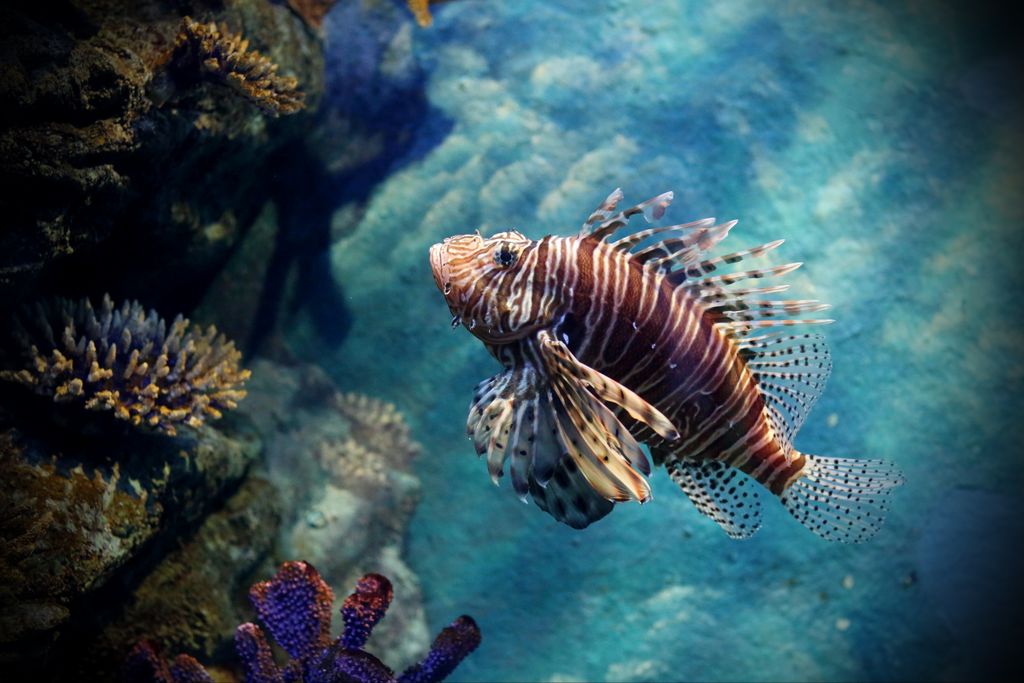
They’re striking. They’re venomous. And they’re eating Florida’s reefs alive.
The lionfish (Pterois volitans) has become one of the most pressing invasive species threats in the Atlantic Ocean. Native to the Indo-Pacific, these ornate, spiny fish likely entered Florida waters through the aquarium trade in the 1980s. Today, they range from the Gulf of Mexico to the Caribbean, with some of the densest populations concentrated right in the Florida Keys.
Why Lionfish Are So Destructive
Unlike most reef predators, lionfish have no natural enemies in Atlantic waters. That, combined with their voracious appetites and staggering reproductive rates, makes them uniquely difficult to control. Here are a few fast facts:
- A single lionfish living on a coral reef can cut native reef fish recruitment by as much as 79%.
- Mature females release roughly 50,000 eggs every three days, year-round — for life. Most native reef fish spawn just once a year.
- They eat more than 70 species of fish and invertebrates, including the young of commercially important species like snapper and grouper.
- Their hollow, venomous spines deter predators and make them hazardous for divers and anglers alike.
What the Florida Keys Are Doing About It
Across Monroe County, researchers, divers, and conservationists are fighting back. Lionfish derbies, which are competitive removal events, have become a popular and effective tool. Local restaurants have embraced lionfish on the menu, helping build a commercial market for the catch.
Education is just as critical as removal. That’s where institutions like the Florida Keys History & Discovery Center in Islamorada play a vital role. The center brings the story of the Keys’ ecosystems, history, and ongoing environmental challenges to life for visitors of all ages. Understanding why the reef matters is the first step toward protecting it.
What You Can Do
Whether you’re a certified diver or simply a curious traveler, you can make a difference:
- Divers: Get trained and join a lionfish removal program through Florida Fish and Wildlife.
- Diners: Order lionfish when you see it on a menu. Eating invasives is one of the most direct forms of conservation.
- Visitors: Stop by the Florida Keys History & Discovery Center to learn how the reef ecosystem works and what’s threatening it. Pass on what you’ve learned!
The lionfish problem won’t solve itself. But with public awareness — and butter and garlic — Florida is fighting back.