Key Takeaways
- Mangroves line more than 1,800 miles of shoreline inside the Florida Keys National Marine Sanctuary, which is roughly the distance from Key West to Maine.
- Three species grow in the Keys — red, black, and white mangroves — and each one handles salt, tides, and storm surge in its own way.
- Tangled prop roots act as a nursery for snapper, tarpon, spiny lobster, and the sport fish that built the local charter industry.
- Mangroves shield homes and roads from wind and waves, trap sediment before it smothers the coral reef, and slowly build new islands.
- Monroe County has lost more than 60 percent of its mangroves since the 1950s, and Florida law now makes it illegal to cut or destroy them.
- The Florida Keys History and Discovery Center in Islamorada connects the trees to the human story of the islands, with aquariums, fishing exhibits, and a research library.
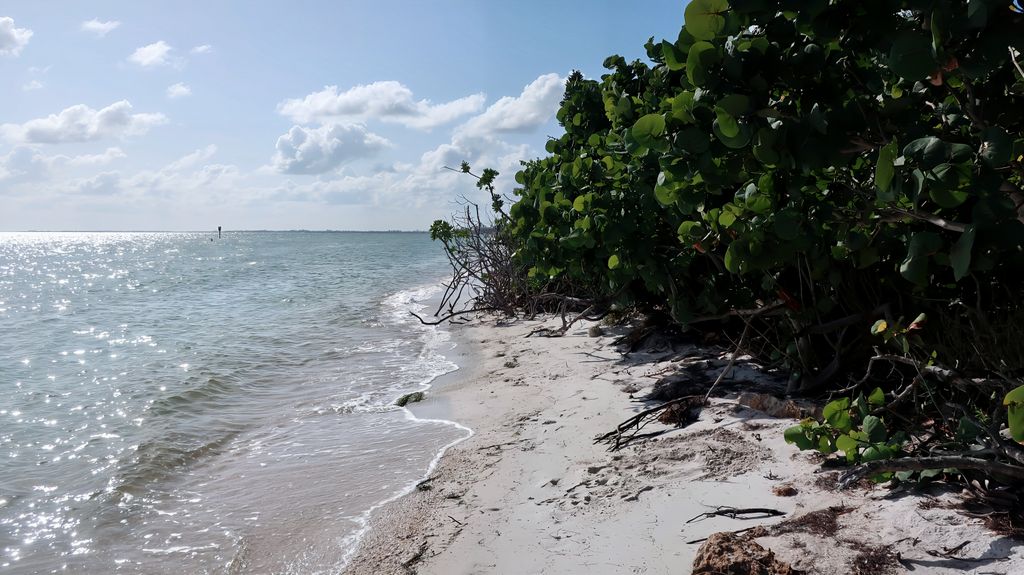
Drive the Overseas Highway and you pass them for hours: low green walls of leaves standing in salt water on stilts. These are mangroves, and the Florida Keys ecosystem does not work without them.
The Walking Trees That Built These Islands
Red mangroves grow at the water’s edge, propped up on arching roots that earned them the nickname “walking trees.” Those roots slow the tide, and settling sediment gradually builds soil. Many of the mangrove islands scattered across Florida Bay exist because a single floating seedling took hold. Black mangroves and white mangroves grow farther upland, where they obtain freshwater by filtering it from saltwater.
A Nursery for Marine Life
Juvenile fish hide in the root tangle until they are big enough to move out to the seagrass flats and the reef. NOAA notes that mangroves also buffer shorelines from storms and catch runoff that would otherwise cloud the water and bury coral.
In short, mangroves feed the two things the Keys economy runs on: fishing and diving.
Where History Meets the Backcountry
The Florida Keys History and Discovery Center in Islamorada features aquariums, fishing exhibits, a theater, and a rotating gallery that trace how pioneers, spongers, and flats guides lived alongside the backcountry. It’s one of the better rainy-day things to do in Islamorada, and it’s open Tuesday through Sunday, 10 a.m. to 5 p.m.
Protect What’s Left
Trimming or removing mangroves without a permit is against the law. Keep your wake down in the mangrove tunnels and visit the Discovery Center to learn more about why these trees are worth the trouble.